Politics
Sunday, August 23, 2026
Politics · Analysis · Developments

Abdixhiku: LDK Withdraws from Any Request for Positions, Is Not a Decoration and an Alibi for Failure
Pristina – The leader of the Democratic League of Kosovo (LDK), Lumir Abdixhiku, has announced that his party is withdrawing from all requests for institutional positions and will not seek participation in the government, emphasizing that the LDK's priority is to overcome the political crisis and functionalize Kosovo's institutions.
In a statement after the meeting of the LDK's parliamentary group, Abdixhiku said that the offer for the party's inclusion in the government, with a limited number of ministers, was not acceptable to the LDK, as it did not reflect the party's political weight and the will of the citizens expressed in the elections.
However, he emphasized that the LDK does not want the requests for positions to become an obstacle to the constitution of the institutions.
“The LDK withdraws from all requests for positions and takes on the responsibility to contribute beyond political gain, in avoiding the current crisis”, Abdixhiku said.
He announced that the LDK is giving up its request for participation in the government, including ministerial positions.
“We don't want any ministers, let the Self-Determination Movement take them all”, he declared.
According to Abdixhiku, the LDK is also withdrawing from the request for the chairmanship of the Assembly and will not condition the institutional process with the taking of any position.
A central part of Abdixhiku's statement was the election of the President of the Republic. He said that the LDK is ready to participate in the process of electing a president who, in his opinion, should represent the unity of the citizens and protect the Constitution and the interests of the Republic of Kosovo.
“We are ready to negotiate with full conviction for the election of a president who protects the interests of the Republic and its Constitution, who represents the unity of the people”, Abdixhiku said.
He emphasized that for this process, the LDK does not seek positions or political compensation, but sets criteria for the figure to be elected as head of state.
Abdixhiku requested that the president should not be a partisan figure, but a president of the entire Republic of Kosovo.
“Let's elect him together, all the political parties of Kosovo, a president who protects the Republic and the Constitution”, he expressed.
Abdixhiku said that the Self-Determination Movement should take responsibility for forming the government if it does not see the need for the LDK's inclusion.
“The Self-Determination Movement should form the government with the deputies of its coalition, let it have all the executives, as they have requested. The LDK will not take the condition they want”, he said.
However, according to him, there are two paths: either an agreement for institutional stability is reached, or the country enters a new political crisis.
He warned that the refusal of any democratic compromise could lead the country towards new elections.
The leader of the LDK said that his party has chosen “the Republic before positions, stability before party interest and dignity before formal participation”.
He said that the LDK's goal has not been to take positions “at any cost”, but to exercise public and state responsibility in a period when Kosovo, in his opinion, needs a clear Euro-Atlantic direction, economic development, and political stability.
Abdixhiku also criticized the statements of Self-Determination officials against the LDK, saying that they have damaged the trust between potential partners.
According to him, coalitions are not built only on numbers and the division of positions, but on respect, trust, and equal treatment.
In a statement after the meeting of the LDK's parliamentary group, Abdixhiku said that the offer for the party's inclusion in the government, with a limited number of ministers, was not acceptable to the LDK, as it did not reflect the party's political weight and the will of the citizens expressed in the elections.
However, he emphasized that the LDK does not want the requests for positions to become an obstacle to the constitution of the institutions.
“The LDK withdraws from all requests for positions and takes on the responsibility to contribute beyond political gain, in avoiding the current crisis”, Abdixhiku said.
He announced that the LDK is giving up its request for participation in the government, including ministerial positions.
“We don't want any ministers, let the Self-Determination Movement take them all”, he declared.
According to Abdixhiku, the LDK is also withdrawing from the request for the chairmanship of the Assembly and will not condition the institutional process with the taking of any position.
A central part of Abdixhiku's statement was the election of the President of the Republic. He said that the LDK is ready to participate in the process of electing a president who, in his opinion, should represent the unity of the citizens and protect the Constitution and the interests of the Republic of Kosovo.
“We are ready to negotiate with full conviction for the election of a president who protects the interests of the Republic and its Constitution, who represents the unity of the people”, Abdixhiku said.
He emphasized that for this process, the LDK does not seek positions or political compensation, but sets criteria for the figure to be elected as head of state.
Abdixhiku requested that the president should not be a partisan figure, but a president of the entire Republic of Kosovo.
“Let's elect him together, all the political parties of Kosovo, a president who protects the Republic and the Constitution”, he expressed.
Abdixhiku said that the Self-Determination Movement should take responsibility for forming the government if it does not see the need for the LDK's inclusion.
“The Self-Determination Movement should form the government with the deputies of its coalition, let it have all the executives, as they have requested. The LDK will not take the condition they want”, he said.
However, according to him, there are two paths: either an agreement for institutional stability is reached, or the country enters a new political crisis.
He warned that the refusal of any democratic compromise could lead the country towards new elections.
The leader of the LDK said that his party has chosen “the Republic before positions, stability before party interest and dignity before formal participation”.
He said that the LDK's goal has not been to take positions “at any cost”, but to exercise public and state responsibility in a period when Kosovo, in his opinion, needs a clear Euro-Atlantic direction, economic development, and political stability.
Abdixhiku also criticized the statements of Self-Determination officials against the LDK, saying that they have damaged the trust between potential partners.
According to him, coalitions are not built only on numbers and the division of positions, but on respect, trust, and equal treatment.
Ad space
New Leadership at Downing Street
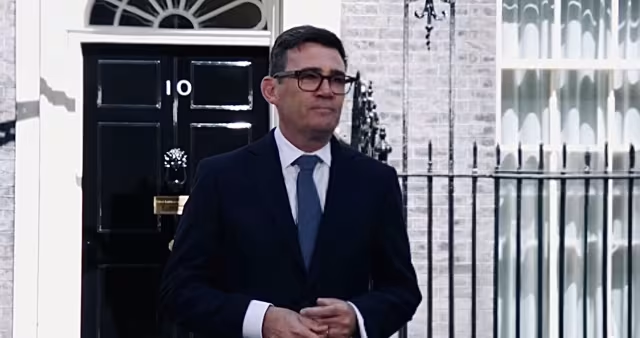
London – Andy Burnham has been appointed the new Prime Minister of the United Kingdom after accepting King Charles III's invitation to form a government. He takes office following the resignation of Keir Starmer, inheriting a political landscape marked by frequent changes in leadership and significant economic challenges.
In his first address outside Downing Street, Burnham said his government would focus on restoring public confidence.
“I have accepted His Majesty the King's invitation to form a government. In doing so, I am acutely conscious that I am the sixth person in the last ten years to walk up this street. The seventh Prime Minister since 2016. Making this a moment for reflection and new resolution.”
He said his priority is to restore stability and ensure politics delivers for the public.
“Britain needs to show the world that we can regain our stability once again. And that is our challenge. To make politics work. To make it work better.”
Burnham also acknowledged growing public frustration with politics.
“I know people at home are fed up with politics. I hear you. And I want to be honest with you. We have not been good enough. And we need to be better.”
The new Prime Minister pledged to deliver the most significant reforms Britain has seen in four decades, built around a new political and economic model.
“We will make this moment a circuit breaker for Britain. Bringing forward the biggest changes in the last 40 years. A new political model and a new economic model.”
He criticized the direction Britain took during the 1980s, arguing that the consequences of centralization and deindustrialization are still being felt today.
“In the 1980s, Britain took some wrong turns. Political power was centralised. Economic power privatised. Large parts of the country deindustrialised. And they still haven't recovered.”
According to Burnham, his government will decentralize decision-making, strengthen public control over essential services, and use public procurement to support British industry.
Later this year, he said, the government will publish a long-term roadmap for the country.
“Later this year, I will bring forward a new plan for Britain. A ten year plan. Laying out a path from where we are now. To where I believe we all want Britain to be.”
Burnham added that the first measures to ease the cost of living would be announced immediately. He also pledged to help more young people into work by reforming the education system, expanding mental health support, and building more council homes.
At the end of his speech, he revealed the very first instruction he intends to give as Prime Minister.
“I will soon go through that door behind me. And issue my first instruction. To end rough sleeping in our country.”
Concluding his address, Burnham said that putting people first would define his government.
“I will put the care of people at the heart of everything I do. I will give this my all. And I ask you all to pull with me.”
In his first address outside Downing Street, Burnham said his government would focus on restoring public confidence.
“I have accepted His Majesty the King's invitation to form a government. In doing so, I am acutely conscious that I am the sixth person in the last ten years to walk up this street. The seventh Prime Minister since 2016. Making this a moment for reflection and new resolution.”
He said his priority is to restore stability and ensure politics delivers for the public.
“Britain needs to show the world that we can regain our stability once again. And that is our challenge. To make politics work. To make it work better.”
Burnham also acknowledged growing public frustration with politics.
“I know people at home are fed up with politics. I hear you. And I want to be honest with you. We have not been good enough. And we need to be better.”
The new Prime Minister pledged to deliver the most significant reforms Britain has seen in four decades, built around a new political and economic model.
“We will make this moment a circuit breaker for Britain. Bringing forward the biggest changes in the last 40 years. A new political model and a new economic model.”
He criticized the direction Britain took during the 1980s, arguing that the consequences of centralization and deindustrialization are still being felt today.
“In the 1980s, Britain took some wrong turns. Political power was centralised. Economic power privatised. Large parts of the country deindustrialised. And they still haven't recovered.”
According to Burnham, his government will decentralize decision-making, strengthen public control over essential services, and use public procurement to support British industry.
Later this year, he said, the government will publish a long-term roadmap for the country.
“Later this year, I will bring forward a new plan for Britain. A ten year plan. Laying out a path from where we are now. To where I believe we all want Britain to be.”
Burnham added that the first measures to ease the cost of living would be announced immediately. He also pledged to help more young people into work by reforming the education system, expanding mental health support, and building more council homes.
At the end of his speech, he revealed the very first instruction he intends to give as Prime Minister.
“I will soon go through that door behind me. And issue my first instruction. To end rough sleeping in our country.”
Concluding his address, Burnham said that putting people first would define his government.
“I will put the care of people at the heart of everything I do. I will give this my all. And I ask you all to pull with me.”
In this section

Politics
LDK Opens Door to Dialogue: Abdixhiku Confirms Meeting with Kurti
The leader of the Democratic League of Kosovo (LDK), Lumir Abdixhiku, has confirmed that he will respond positively to the invitation of the acting prime minister and leader of the Vetëvendosje Movement, Albin Kurti, for a meeting as part of the consultations for the formation of the country's new institutions.
The statement was made after the meeting of the LDK Presidency, the first since the certification of the election results by the Central Election Commission.
Abdixhiku said he had accepted an official invitation for a "1+1" format meeting, while explaining that the date will be set by the teams of the two parties.
"We will respond positively to this invitation. This will be the first meeting and then we will hold meetings with the leaders of other parliamentary parties to understand their positions and attitudes," he declared.
According to Abdixhiku, this is the first official communication between LDK and Vetëvendosje after the elections.
In his statement, he made it known that the LDK Presidency has appreciated the commitment of the party's structures, candidates, and the result achieved in the elections, thanking all activists for their work during the campaign.
Abdixhiku reiterated that LDK remains ready to contribute to the formation of new institutions, but only on the basis of its political principles.
"We want an inclusive process of building institutions, with a balance between powers and respect for the principles we represent," he said.
Asked about the internal developments in LDK and the demands for holding an Extraordinary Congress, Abdixhiku said that the statutory procedures are clear and that, if a third of the delegates submit a request, the congress will be called immediately.
He emphasized that he does not intend to stay at the head of the party at all costs.
"We do not stay by force. The will of the membership is what decides. Our mission is to make LDK stronger than we found it," he declared.
Regarding the analysis of the electoral result, Abdixhiku said that the process has started and will be detailed, while the conclusions will be published by the party's secretariat.
In questions related to the election of the president, he did not give concrete names, but warned that first, meetings with the political parties must be held and then the LDK's organs will make the relevant decisions.
Finally, Abdixhiku emphasized that Kosovo should not face new elections again.
"It makes no sense for the country to go back to elections after just a few months. We will enter into talks with good will, but while protecting our principles and the interest of the Republic of Kosovo," he concluded.
The statement was made after the meeting of the LDK Presidency, the first since the certification of the election results by the Central Election Commission.
Abdixhiku said he had accepted an official invitation for a "1+1" format meeting, while explaining that the date will be set by the teams of the two parties.
"We will respond positively to this invitation. This will be the first meeting and then we will hold meetings with the leaders of other parliamentary parties to understand their positions and attitudes," he declared.
According to Abdixhiku, this is the first official communication between LDK and Vetëvendosje after the elections.
In his statement, he made it known that the LDK Presidency has appreciated the commitment of the party's structures, candidates, and the result achieved in the elections, thanking all activists for their work during the campaign.
Abdixhiku reiterated that LDK remains ready to contribute to the formation of new institutions, but only on the basis of its political principles.
"We want an inclusive process of building institutions, with a balance between powers and respect for the principles we represent," he said.
Asked about the internal developments in LDK and the demands for holding an Extraordinary Congress, Abdixhiku said that the statutory procedures are clear and that, if a third of the delegates submit a request, the congress will be called immediately.
He emphasized that he does not intend to stay at the head of the party at all costs.
"We do not stay by force. The will of the membership is what decides. Our mission is to make LDK stronger than we found it," he declared.
Regarding the analysis of the electoral result, Abdixhiku said that the process has started and will be detailed, while the conclusions will be published by the party's secretariat.
In questions related to the election of the president, he did not give concrete names, but warned that first, meetings with the political parties must be held and then the LDK's organs will make the relevant decisions.
Finally, Abdixhiku emphasized that Kosovo should not face new elections again.
"It makes no sense for the country to go back to elections after just a few months. We will enter into talks with good will, but while protecting our principles and the interest of the Republic of Kosovo," he concluded.

Politics
Who secured seats in the Kosovo Assembly?
After the completion of the vote count, the list of candidates who have secured a parliamentary seat and are expected to represent citizens in the Kosovo Assembly from the four largest political entities has been made known:
The Vetëvendosje Movement, as the winning party of the elections, will be represented by Albin Kurti, Glauk Konjufca, Albulena Haxhiu, Hekuran Murati, Donika Gërvalla-Schwarz, Xhelal Sveçla, Ejup Maqedonci, Avni Dehari, Hajrulla Çeku, Mimoza Kusari-Lila, Shqipe Mehmeti Selimi, Andin Hoti, Arben Vitia, Ilir Kërçeli, Saranda Bogujevci, Osman Musliu, Nezir Kraki, Alban Bajrami, Arton Konushevci, Edona Llalloshi, Mefail Bajqinovci, Ardian Gola, Armend Baloku, Armend Muja, Arbëreshë Kryeziu-Hyseni, Arbër Rexhaj, Rufki Suma, Fitore Pacolli-Dalipi, Blerim Gashi, Artane Rizvanolli-Berisha, Adriana Matoshi, Agim Bahtiri, Arjeta Fejza, Taulant Kelmendi, Arbërie Nagavci, Krenare Çerkini, Dimal Basha, Liza Gashi, Labinotë Demi-Murtezi, Artan Abrashi, Adnan Rrustemi, Adelina Grainca, Valon Ramadani, Salih Zyba, Enver Haliti, Fatmire Kollçaku, Valon Hoti, Valon Peci, Drita Pajaziti, Jeton Raka, Sylejman Meholli, Vigan Qorrolli, and Fjolla Ujkani.
From the Democratic Party of Kosovo, the following have been confirmed: Bedri Hamza, Përparim Gruda, Arian Tahiri, Uran Ismaili, Vlora Çitaku, Sala Jashari, Ganimete Musliu, Enver Hoxhaj, Arben Mustafa, Rrahman Rama, Mërgim Lushtaku, Elmi Reçica, Besa Kabashi-Ramaj, Jakup Nura, Eman Rrahmani, Altin Krasniqi, Artan Behrami, Fadil Demaku, Blerta Deliu-Kodra, Rrustem Mustafa, Eliza Hoxha, and Ariana Musliu-Shoshi.
The Democratic League of Kosovo will be represented in the new legislature by Vjosa Osmani, Lumir Abdixhiku, Doarsa Kica-Xhelili, Hykmete Bajrami, Avdullah Hoti, Ukë Rugova, Kujtim Shala, Anton Quni, Lutfi Haziri, Armend Zemaj, Besian Mustafa, Janina Ymeri, Ermal Sadiku, Jehona Lushaku-Sadriu, Arben Gashi, Albena Reshitaj, Fadil Hadergjonaj, and Paris Guri.
Meanwhile, the Alliance for the Future of Kosovo has secured seats for Ardian Gjini, Ramush Haradinaj, Daut Haradinaj, Besnik Tahiri, Time Kadrijaj, Albana Bytyqi, and Teuta Haxhiu.
The names presented are based on the current results of the vote count. However, the final composition of the new legislature will be confirmed after the certification of the results by the Central Election Commission and the completion of any possible appeal procedures.
The Vetëvendosje Movement, as the winning party of the elections, will be represented by Albin Kurti, Glauk Konjufca, Albulena Haxhiu, Hekuran Murati, Donika Gërvalla-Schwarz, Xhelal Sveçla, Ejup Maqedonci, Avni Dehari, Hajrulla Çeku, Mimoza Kusari-Lila, Shqipe Mehmeti Selimi, Andin Hoti, Arben Vitia, Ilir Kërçeli, Saranda Bogujevci, Osman Musliu, Nezir Kraki, Alban Bajrami, Arton Konushevci, Edona Llalloshi, Mefail Bajqinovci, Ardian Gola, Armend Baloku, Armend Muja, Arbëreshë Kryeziu-Hyseni, Arbër Rexhaj, Rufki Suma, Fitore Pacolli-Dalipi, Blerim Gashi, Artane Rizvanolli-Berisha, Adriana Matoshi, Agim Bahtiri, Arjeta Fejza, Taulant Kelmendi, Arbërie Nagavci, Krenare Çerkini, Dimal Basha, Liza Gashi, Labinotë Demi-Murtezi, Artan Abrashi, Adnan Rrustemi, Adelina Grainca, Valon Ramadani, Salih Zyba, Enver Haliti, Fatmire Kollçaku, Valon Hoti, Valon Peci, Drita Pajaziti, Jeton Raka, Sylejman Meholli, Vigan Qorrolli, and Fjolla Ujkani.
From the Democratic Party of Kosovo, the following have been confirmed: Bedri Hamza, Përparim Gruda, Arian Tahiri, Uran Ismaili, Vlora Çitaku, Sala Jashari, Ganimete Musliu, Enver Hoxhaj, Arben Mustafa, Rrahman Rama, Mërgim Lushtaku, Elmi Reçica, Besa Kabashi-Ramaj, Jakup Nura, Eman Rrahmani, Altin Krasniqi, Artan Behrami, Fadil Demaku, Blerta Deliu-Kodra, Rrustem Mustafa, Eliza Hoxha, and Ariana Musliu-Shoshi.
The Democratic League of Kosovo will be represented in the new legislature by Vjosa Osmani, Lumir Abdixhiku, Doarsa Kica-Xhelili, Hykmete Bajrami, Avdullah Hoti, Ukë Rugova, Kujtim Shala, Anton Quni, Lutfi Haziri, Armend Zemaj, Besian Mustafa, Janina Ymeri, Ermal Sadiku, Jehona Lushaku-Sadriu, Arben Gashi, Albena Reshitaj, Fadil Hadergjonaj, and Paris Guri.
Meanwhile, the Alliance for the Future of Kosovo has secured seats for Ardian Gjini, Ramush Haradinaj, Daut Haradinaj, Besnik Tahiri, Time Kadrijaj, Albana Bytyqi, and Teuta Haxhiu.
The names presented are based on the current results of the vote count. However, the final composition of the new legislature will be confirmed after the certification of the results by the Central Election Commission and the completion of any possible appeal procedures.

Politics
Trump Announces Agreement Between the United States and Iran
The United States and Iran have reached an agreement aimed at ending months of hostilities, according to statements from U.S. President Donald Trump and Pakistani Prime Minister Shehbaz Sharif, who has been mediating talks between the two sides, The Washington Post reported.
Trump said on Sunday that the agreement with Iran had been finalized, describing it as a significant step toward stabilizing the region. According to him, the deal includes the reopening of the Strait of Hormuz and the end of the U.S. naval blockade of Iranian ports.
Meanwhile, Sharif announced that both parties had agreed to an immediate and permanent cessation of military operations on all fronts, including in Lebanon. He added that an official signing ceremony is expected to take place in Switzerland on Friday, while additional mediation meetings are scheduled throughout the week.
If formalized as planned, the agreement would represent the most significant accord between the United States and Iran since the start of the four-month conflict, which has had a substantial impact on global energy markets and regional security.
Trump Announces Agreement Between the United States and Iran
Trump Announces Agreement Between the United States and Iran
The United States and Iran have reached an agreement aimed at ending months of hostilities, according to statements from U.S. President Donald Trump and Pakistani Prime Minister Shehbaz Sharif, who has been mediating talks between the two sides, The Washington Post reported.
Trump said on Sunday that the agreement with Iran had been finalized, describing it as a significant step toward stabilizing the region. According to him, the deal includes the reopening of the Strait of Hormuz and the end of the U.S. naval blockade of Iranian ports.
Meanwhile, Sharif announced that both parties had agreed to an immediate and permanent cessation of military operations on all fronts, including in Lebanon. He added that an official signing ceremony is expected to take place in Switzerland on Friday, while additional mediation meetings are scheduled throughout the week.
If formalized as planned, the agreement would represent the most significant accord between the United States and Iran since the start of the four-month conflict, which has had a substantial impact on global energy markets and regional security.
More headlines
06
LVV Leads with 42.91%, but the Race for Second Place Remains Open
LVV Leads with 42.91%, but the Race for Second Place Remains Open
With all 2,498 polling stations processed, Kosovo’s preliminary parliamentary election results show that the Self-Determination Movement (LVV) remains the largest political force in the country, although with a significantly lower result compared to the parliamentary elections of December 2025.
According to the latest data, LVV has secured 299,152 votes, or 42.91 percent of the vote, remaining the leading party but recording the largest decline compared to the December 28, 2025 elections, when it received 49.34 percent. The Democratic Party of Kosovo (PDK) ranks second with 147,325 votes, or 21.13 percent, remaining largely unchanged from its 20.98 percent result in 2025.
The Democratic League of Kosovo (LDK) has posted the strongest growth, rising to 17.59 percent from 13.57 percent, while the Alliance for the Future of Kosovo (AAK) has increased from 5.66 percent to 7.16 percent. Meanwhile, the Serb List has secured 43,071 votes, representing 6.18 percent of the votes counted so far.
Based solely on the votes counted within Kosovo, the current composition of the Assembly would be projected approximately as follows: • LVV: 43–45 seats • PDK: 21–22 seats • LDK: 18–19 seats • AAK: 7–8 seats
However, the final outcome remains open due to diaspora votes, which have historically favored LVV more strongly than voters inside Kosovo. In previous elections, support for LVV among the diaspora has been estimated at over 60 percent.
In a scenario where President Vjosa Osmani exerts a strong influence on diaspora voting patterns, LDK could secure as much as 36 percent of the diaspora vote, while LVV’s share could decline to around 44 percent.
Under such a scenario, the final nationwide result could approach: • LVV: 47–48% • PDK: around 22% • LDK: 22–23% • AAK: 7–8%
The corresponding seat distribution could be: • LVV: 48 seats • PDK: 21–22 seats • LDK: 22 seats • AAK: 8 seats
Such a result would significantly narrow the gap between PDK and LDK and could create a very close contest for the position of the second-largest party in the Assembly.
The election appears to be telling two parallel stories. On one hand, LVV has experienced a decline compared to its 2025 result. On the other hand, LDK has recorded the strongest growth among the major Albanian parties and could further strengthen its position if diaspora votes prove more favorable than in previous electoral cycles.
The final composition of the Kosovo Assembly will depend on the official counting of diaspora votes, conditional ballots, and the final allocation of mandates. While LVV is expected to remain the largest parliamentary group, the race for second place and the broader political balance remain very much open.
With all 2,498 polling stations processed, Kosovo’s preliminary parliamentary election results show that the Self-Determination Movement (LVV) remains the largest political force in the country, although with a significantly lower result compared to the parliamentary elections of December 2025.
According to the latest data, LVV has secured 299,152 votes, or 42.91 percent of the vote, remaining the leading party but recording the largest decline compared to the December 28, 2025 elections, when it received 49.34 percent. The Democratic Party of Kosovo (PDK) ranks second with 147,325 votes, or 21.13 percent, remaining largely unchanged from its 20.98 percent result in 2025.
The Democratic League of Kosovo (LDK) has posted the strongest growth, rising to 17.59 percent from 13.57 percent, while the Alliance for the Future of Kosovo (AAK) has increased from 5.66 percent to 7.16 percent. Meanwhile, the Serb List has secured 43,071 votes, representing 6.18 percent of the votes counted so far.
Based solely on the votes counted within Kosovo, the current composition of the Assembly would be projected approximately as follows: • LVV: 43–45 seats • PDK: 21–22 seats • LDK: 18–19 seats • AAK: 7–8 seats
However, the final outcome remains open due to diaspora votes, which have historically favored LVV more strongly than voters inside Kosovo. In previous elections, support for LVV among the diaspora has been estimated at over 60 percent.
In a scenario where President Vjosa Osmani exerts a strong influence on diaspora voting patterns, LDK could secure as much as 36 percent of the diaspora vote, while LVV’s share could decline to around 44 percent.
Under such a scenario, the final nationwide result could approach: • LVV: 47–48% • PDK: around 22% • LDK: 22–23% • AAK: 7–8%
The corresponding seat distribution could be: • LVV: 48 seats • PDK: 21–22 seats • LDK: 22 seats • AAK: 8 seats
Such a result would significantly narrow the gap between PDK and LDK and could create a very close contest for the position of the second-largest party in the Assembly.
The election appears to be telling two parallel stories. On one hand, LVV has experienced a decline compared to its 2025 result. On the other hand, LDK has recorded the strongest growth among the major Albanian parties and could further strengthen its position if diaspora votes prove more favorable than in previous electoral cycles.
The final composition of the Kosovo Assembly will depend on the official counting of diaspora votes, conditional ballots, and the final allocation of mandates. While LVV is expected to remain the largest parliamentary group, the race for second place and the broader political balance remain very much open.
07
The Alliance Officially Confirms Political Transition at the Top of the Party
The Alliance Officially Confirms Political Transition at the Top of the Party
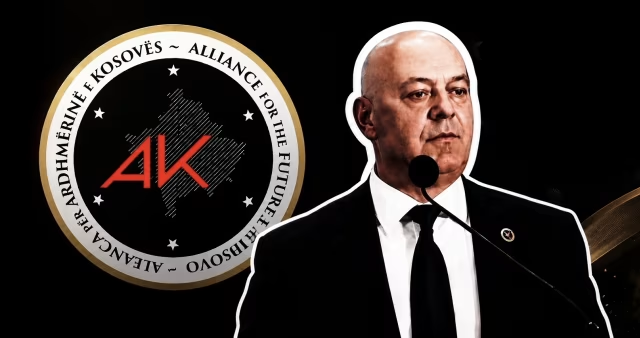
After more than two decades under the leadership of Ramush Haradinaj, Ardian Gjini has officially been confirmed as the head of the Alliance for the Future of Kosovo (AAK) during the party’s Tenth Electoral Assembly, marking one of the most significant political transitions in the party’s history.
The transfer of leadership from Haradinaj to Gjini is being viewed as a key moment for the Alliance, a political party that for years had been closely associated with the figure of the former Kosovo Liberation Army commander and former Prime Minister of Kosovo. Haradinaj led AAK since its founding in 2000, transforming it into one of the influential political forces in Kosovo’s state-building process.
The Alliance for the Future of Kosovo was consolidated as a political alliance that brought together parties, initiatives, and movements emerging from the war, aiming to create a new political force rooted in the legacy of Kosovo’s resistance and liberation struggle.
In its early years, AAK functioned as a more decentralized political alliance, where regional branches and local political figures played an important role in strengthening the party. This organizational model helped the Alliance build its strongest political base in the Dukagjini region before later expanding across other parts of Kosovo.
Under the leadership of Ramush Haradinaj, who also served as Prime Minister of Kosovo, the Alliance for the Future of Kosovo participated in several governments, producing ministers, members of parliament, mayors, and leaders of state institutions. The party built its political identity around issues of national security, relations with Western allies, state-building, and support for former fighters.
The official confirmation of Ardian Gjini as head of the Alliance for the Future of Kosovo was presented as the beginning of a new political and electoral phase for the party. During speeches delivered at the assembly, party officials emphasized continuity in the Alliance’s political course and the preservation of the political identity it has built over the years.
Ardian Gjini is considered one of the oldest and most established figures within the Alliance for the Future of Kosovo, with a long-standing role in Kosovo’s political and institutional life. Over the years, he has held several public positions, including minister, member of parliament, and mayor of Gjakova, while also serving as one of Ramush Haradinaj’s closest political associates within the party structures.
After more than two decades under the leadership of Ramush Haradinaj, Ardian Gjini has officially been confirmed as the head of the Alliance for the Future of Kosovo (AAK) during the party’s Tenth Electoral Assembly, marking one of the most significant political transitions in the party’s history.
The transfer of leadership from Haradinaj to Gjini is being viewed as a key moment for the Alliance, a political party that for years had been closely associated with the figure of the former Kosovo Liberation Army commander and former Prime Minister of Kosovo. Haradinaj led AAK since its founding in 2000, transforming it into one of the influential political forces in Kosovo’s state-building process.
The Alliance for the Future of Kosovo was consolidated as a political alliance that brought together parties, initiatives, and movements emerging from the war, aiming to create a new political force rooted in the legacy of Kosovo’s resistance and liberation struggle.
In its early years, AAK functioned as a more decentralized political alliance, where regional branches and local political figures played an important role in strengthening the party. This organizational model helped the Alliance build its strongest political base in the Dukagjini region before later expanding across other parts of Kosovo.
Under the leadership of Ramush Haradinaj, who also served as Prime Minister of Kosovo, the Alliance for the Future of Kosovo participated in several governments, producing ministers, members of parliament, mayors, and leaders of state institutions. The party built its political identity around issues of national security, relations with Western allies, state-building, and support for former fighters.
The official confirmation of Ardian Gjini as head of the Alliance for the Future of Kosovo was presented as the beginning of a new political and electoral phase for the party. During speeches delivered at the assembly, party officials emphasized continuity in the Alliance’s political course and the preservation of the political identity it has built over the years.
Ardian Gjini is considered one of the oldest and most established figures within the Alliance for the Future of Kosovo, with a long-standing role in Kosovo’s political and institutional life. Over the years, he has held several public positions, including minister, member of parliament, and mayor of Gjakova, while also serving as one of Ramush Haradinaj’s closest political associates within the party structures.

08
Kosovo Parliament Dissolved After Deadline to Elect President Expires
Kosovo’s parliament has been dissolved after lawmakers failed to elect a new president within the timeframe required by the constitution, triggering the country’s move toward early parliamentary elections.
The Assembly was unable to move forward with the presidential election after attempts to hold the vote failed, leaving parliament unable to complete the procedure before the deadline linked to the end of President Vjosa Osmani’s mandate in April.
A lack of consensus between the ruling party and the opposition contributed to the stalemate. The ruling Vetëvendosje movement, led by Prime Minister Albin Kurti, had proposed Foreign Minister Glauk Konjufca as a candidate for the presidency, but opposition parties refused to support the nomination and did not participate in the session.
Under constitutional rules, the president is elected by parliament through a multi-round voting procedure. A candidate must secure a two-thirds majority of votes in the first two rounds. If no candidate is elected, a third round can be held in which a simple majority is sufficient.
Without sufficient participation from lawmakers, the Assembly was unable to reach the quorum required to proceed with the presidential vote. The deadlock prevented the election process from advancing through the rounds required by Kosovo’s constitution.
The decision was announced by President Vjosa Osmani after the constitutional deadline for electing a president expired.
Following the dissolution, Kosovo must organize elections within approximately 45 days. The vote will determine the new composition of the Assembly and is expected to shape the country’s next governing majority.
The Assembly was unable to move forward with the presidential election after attempts to hold the vote failed, leaving parliament unable to complete the procedure before the deadline linked to the end of President Vjosa Osmani’s mandate in April.
A lack of consensus between the ruling party and the opposition contributed to the stalemate. The ruling Vetëvendosje movement, led by Prime Minister Albin Kurti, had proposed Foreign Minister Glauk Konjufca as a candidate for the presidency, but opposition parties refused to support the nomination and did not participate in the session.
Under constitutional rules, the president is elected by parliament through a multi-round voting procedure. A candidate must secure a two-thirds majority of votes in the first two rounds. If no candidate is elected, a third round can be held in which a simple majority is sufficient.
Without sufficient participation from lawmakers, the Assembly was unable to reach the quorum required to proceed with the presidential vote. The deadlock prevented the election process from advancing through the rounds required by Kosovo’s constitution.
The decision was announced by President Vjosa Osmani after the constitutional deadline for electing a president expired.
Following the dissolution, Kosovo must organize elections within approximately 45 days. The vote will determine the new composition of the Assembly and is expected to shape the country’s next governing majority.
09
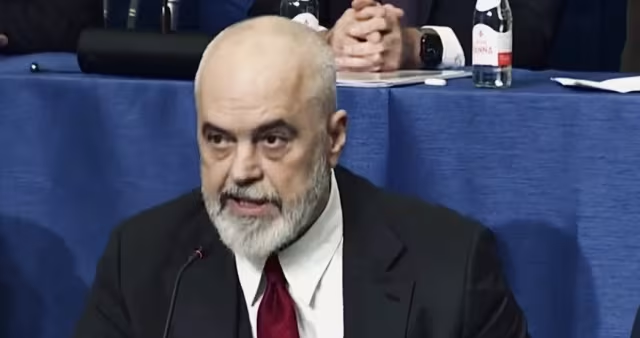
Albania’s Prime Minister Edi Rama Calls for Trump’s Engagement in Thaçi Judicial Process
Albania’s Prime Minister has called for the engagement of Donald Trump regarding the judicial process against Hashim Thaçi, using a direct appeal urging action on this matter. He stated that the situation requires a response, emphasizing the importance that, in his view, this issue carries.
“At the time, the President of Kosovo was brutally prevented from traveling to the White House to sign that agreement in the presence of President Trump. And this was the work of the same ‘sicario’ prosecutor who had also gone after President Trump himself and became famous worldwide for it.”
“Today, the President of Kosovo has already spent six years in pre-trial detention before a Special Court in The Hague, sponsored by several democratic states, some of them present here, which should be ashamed of this kind of international justice. Just last week, Mr. President, another prosecutor funded by this great country and its taxpayers requested a 45-year prison sentence for him — a request that sent waves of humiliating shock throughout an entire nation seeking peace.”
“At this moment, only a few months separate a man who rose from resistance against ethnic cleansing to become a peacemaker from a potentially devastating outcome in a court that, so far, has failed at every step to uphold the standards of democratic justice. For God’s sake, Mr. President, let us do something before, as you say, very bad things happen again,”ends his remarks
“At the time, the President of Kosovo was brutally prevented from traveling to the White House to sign that agreement in the presence of President Trump. And this was the work of the same ‘sicario’ prosecutor who had also gone after President Trump himself and became famous worldwide for it.”
“Today, the President of Kosovo has already spent six years in pre-trial detention before a Special Court in The Hague, sponsored by several democratic states, some of them present here, which should be ashamed of this kind of international justice. Just last week, Mr. President, another prosecutor funded by this great country and its taxpayers requested a 45-year prison sentence for him — a request that sent waves of humiliating shock throughout an entire nation seeking peace.”
“At this moment, only a few months separate a man who rose from resistance against ethnic cleansing to become a peacemaker from a potentially devastating outcome in a court that, so far, has failed at every step to uphold the standards of democratic justice. For God’s sake, Mr. President, let us do something before, as you say, very bad things happen again,”ends his remarks
10
Kosovo Forms New Institutions
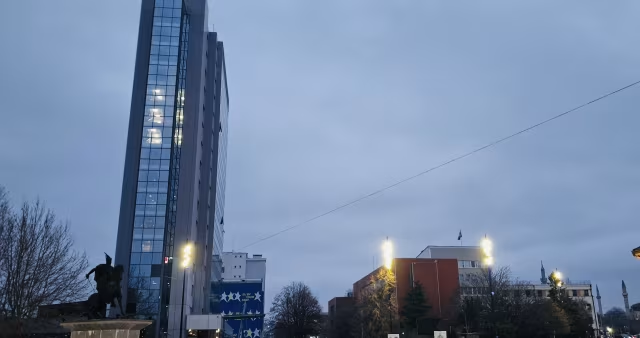
The elected members of the Assembly of Kosovo have taken the solemn oath at the constitutive session of the new legislature, officially assuming their parliamentary mandate and paving the way for the full functioning of the highest legislative institution in the country.
The session was chaired by the interim chair, in accordance with the procedures set out in the Rules of Procedure of the Assembly. After the verification of the mandates by the relevant committee, the members stood up and read the text of the oath, pledging to respect the Constitution and laws of the Republic of Kosovo. The session was attended by representatives from all political parties that have secured seats in the Assembly, as well as MPs from non-majority communities, who with this act officially began exercising their four-year term as representatives of the citizens.
Following the constitutive session, Albulena Haxhiu was elected Speaker of the Assembly of Kosovo, taking the lead of the legislature in a new institutional period for the country. Her election took place after the certification of the election results and the swearing-in of the MPs, where she secured the support of the parliamentary majority to assume the position of Speaker and lead the proceedings of the Assembly.The new Speaker pledged to exercise her duties in accordance with the Constitution and parliamentary regulations, emphasizing the importance of the democratic functioning of the institution. She thanked the MPs for their trust and expressed her readiness to cooperate with all parliamentary groups.
Meanwhile, the Parliament has also voted for the new Government, electing Albin Kurti as Prime Minister for the third time, after a one-year period of political deadlock that had paralyzed the institutions. This vote marks the start of the third governing mandate for Kurti and his cabinet, known as "Kurti 3".After the presentation of the exposition and debate on the government program, the cabinet was approved with 66 votes in favor, 49 against and no abstentions. The government consists of 19 ministers and three deputy prime ministers, while key figures include Glauk Konjufca as First Deputy Prime Minister and Minister of Foreign Affairs and Donika Gërvalla-Schwarz as Deputy Prime Minister and Minister of Justice.
The new four-year mandate comes after the extraordinary elections of 28 December 2025, in which the Vetëvendosje Movement secured 57 seats in the 120-member Assembly, managing to form a functional majority together with representatives of non-majority communities.
The formation of the government ends a long period of political uncertainty, during which institutions remained blocked due to the lack of a parliamentary majority. Kurti had been serving as acting prime minister for months while negotiations to form a new government were underway.
In his speech to MPs, Kurti highlighted the executive's priorities, including strengthening cooperation with Western allies, investing in defense, and advancing dialogue with Serbia. Among the main challenges the government is expected to face are approving the 2026 budget, securing international financial support, and managing ongoing regional tensions.
With the constitution of the Assembly, the election of the speaker, and the vote on the new government, Kosovo is entering a new institutional phase. The legislature and executive are expected to focus on economic development, the rule of law, and integration processes, marking the beginning of a new chapter in the country's political life.
The session was chaired by the interim chair, in accordance with the procedures set out in the Rules of Procedure of the Assembly. After the verification of the mandates by the relevant committee, the members stood up and read the text of the oath, pledging to respect the Constitution and laws of the Republic of Kosovo. The session was attended by representatives from all political parties that have secured seats in the Assembly, as well as MPs from non-majority communities, who with this act officially began exercising their four-year term as representatives of the citizens.
Following the constitutive session, Albulena Haxhiu was elected Speaker of the Assembly of Kosovo, taking the lead of the legislature in a new institutional period for the country. Her election took place after the certification of the election results and the swearing-in of the MPs, where she secured the support of the parliamentary majority to assume the position of Speaker and lead the proceedings of the Assembly.The new Speaker pledged to exercise her duties in accordance with the Constitution and parliamentary regulations, emphasizing the importance of the democratic functioning of the institution. She thanked the MPs for their trust and expressed her readiness to cooperate with all parliamentary groups.
Meanwhile, the Parliament has also voted for the new Government, electing Albin Kurti as Prime Minister for the third time, after a one-year period of political deadlock that had paralyzed the institutions. This vote marks the start of the third governing mandate for Kurti and his cabinet, known as "Kurti 3".After the presentation of the exposition and debate on the government program, the cabinet was approved with 66 votes in favor, 49 against and no abstentions. The government consists of 19 ministers and three deputy prime ministers, while key figures include Glauk Konjufca as First Deputy Prime Minister and Minister of Foreign Affairs and Donika Gërvalla-Schwarz as Deputy Prime Minister and Minister of Justice.
The new four-year mandate comes after the extraordinary elections of 28 December 2025, in which the Vetëvendosje Movement secured 57 seats in the 120-member Assembly, managing to form a functional majority together with representatives of non-majority communities.
The formation of the government ends a long period of political uncertainty, during which institutions remained blocked due to the lack of a parliamentary majority. Kurti had been serving as acting prime minister for months while negotiations to form a new government were underway.
In his speech to MPs, Kurti highlighted the executive's priorities, including strengthening cooperation with Western allies, investing in defense, and advancing dialogue with Serbia. Among the main challenges the government is expected to face are approving the 2026 budget, securing international financial support, and managing ongoing regional tensions.
With the constitution of the Assembly, the election of the speaker, and the vote on the new government, Kosovo is entering a new institutional phase. The legislature and executive are expected to focus on economic development, the rule of law, and integration processes, marking the beginning of a new chapter in the country's political life.